



Executive team coaching, team building and offsite facilitation: the difference
Executive team coaching, team building and offsite facilitation are three different things bought for the same reason, a leadership team that is not working as one, and the difference is what is left behind. A team-building day leaves a memory; a facilitated offsite leaves a decision; executive team coaching leaves a team that works differently on Monday, because it changes how the members deal with each other over months, not hours.
This page is for a chief executive or a chief human resources officer with a top team that is not aligned, not talking straight, or not holding each other to account, and who has to decide what kind of help to buy. It says what each of the three is for, what executive team coaching actually works on, and how to tell which one the team needs.
What is executive team coaching?
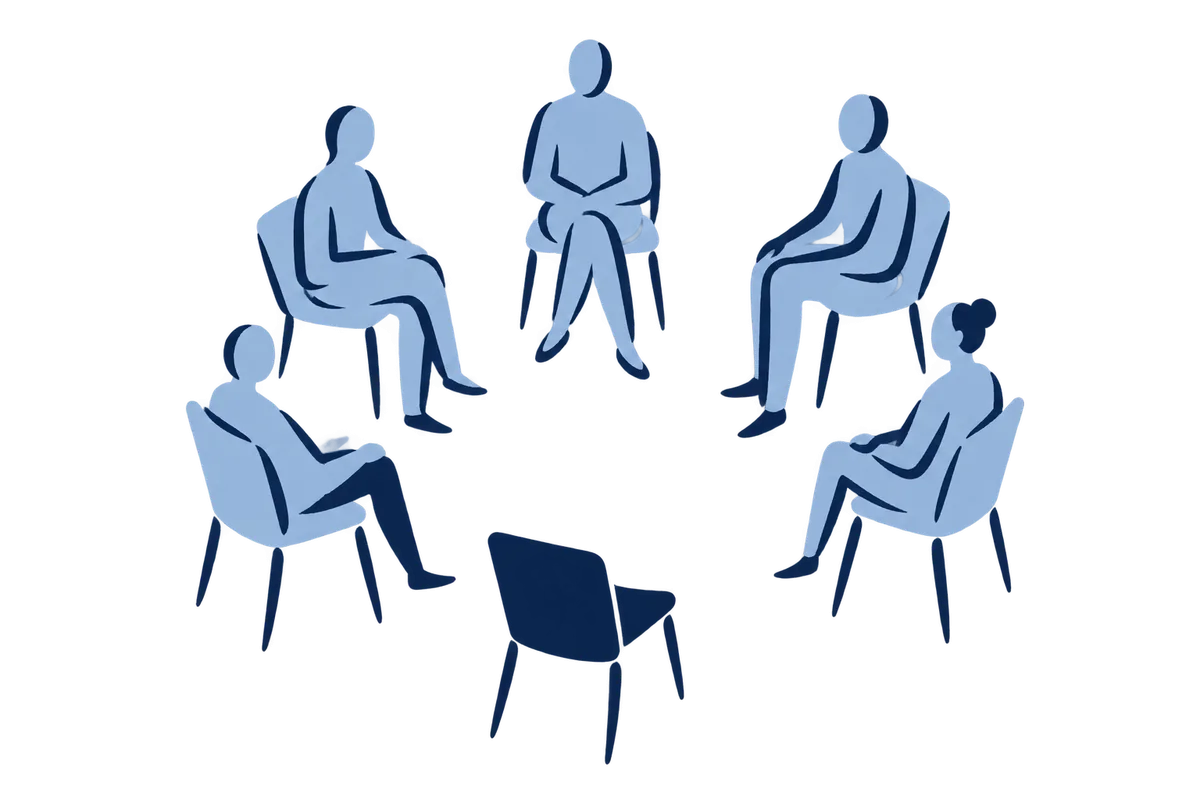
Executive team coaching is coaching applied to a leadership team as a unit: a sustained engagement, with the whole team in the room, that works on how the team decides, communicates, disagrees and holds itself accountable. We describe it as work to transform team dynamics, foster alignment, and unlock the collective potential of your organization's top leaders.
The unit of work is the team, not the individuals in it. Each member may also have a coach of their own; team coaching is about what happens between them, and it is measured by whether the team's meetings, decisions and follow-through change.
What does executive team coaching work on?
Five things, which are the focus of our executive team coaching: strategic alignment, communication and trust, leadership synergy, constructive conflict, and accountability. Each is a question the team answers together, over the engagement, rather than a topic presented to it.
Strategic alignment. The team aligns around core objectives and a shared vision, so that everyone is focused on the same strategic priorities, with roles and goals clarified.
Communication and trust. Open communication is what a high-performing team runs on. The work builds a culture of transparency and respect in which every voice is heard, which is what lets a team meet a hard problem with resilience rather than silence.
Leadership synergy. Each member brings different strengths. The coaching harnesses them into a synergy that improves decisions and encourages innovation, rather than leaving the strongest voice to decide.
Constructive conflict. Conflict in a top team is normal; how it is handled decides the team. The coaching helps a team address conflict constructively, turning differences into growth opportunities.
Accountability. Growth that lasts requires commitments that are kept. The team sets clear commitments and action steps, so progress is measurable and continuous, and the habit of accountability outlasts the engagement.
How is team building different?
Team building is an event: a day or two, usually away from the office, designed to build rapport and goodwill. It is good at what it does, and what it does is temporary, because it does not touch the way the team makes decisions or handles disagreement when it is back at work.
The test is simple. Ask what the team does differently three months after the day. If the answer is that people like each other more, that was team building. If the answer is that the executive committee now decides faster and argues better, that was coaching.
How is offsite facilitation different?
A facilitated offsite is a working session with an outsider running the room, usually to produce a specific outcome: a strategy, a set of priorities, a decision the team had been avoiding. The facilitator owns the process for those hours; the team owns the outcome.
It is the right tool when the team needs a decision and a neutral hand to get there. It is the wrong tool when the problem is the way the team works together, because the offsite ends and the way the team works does not change. Team coaching often includes facilitated sessions; a facilitated offsite rarely includes coaching.
Which does a leadership team need?
If the team gets on but cannot decide, an offsite. If the team decides but the members barely know each other, team building. If the team's way of working is the problem, if alignment, trust, conflict or accountability is what is missing, executive team coaching. Most top teams that ask for one of the first two need the third.
Our coaches work with both individuals and teams. Boris Carl coaches both individuals and teams, one to one as a sparring partner to senior executives and with leadership teams as a unit, and Ricardo Matamala's work at OCC Solutions has been in collaborative work and leadership across organisations in Latin America for three decades. A team engagement begins the way every engagement with us does: with a chemistry meeting, here with the team's leader, so that the match is right before anything is agreed.
The three, side by side
| Executive team coaching | Team building | Offsite facilitation | |
|---|---|---|---|
| Unit of work | The team, over months | The group, for a day | The room, for a session |
| Aim | How the team decides, disagrees and follows through | Rapport and goodwill | One outcome: a strategy, a decision |
| Who owns the outcome | The team | The organisers | The team, with the facilitator owning the process |
| What is left behind | A different way of working | A shared memory | A document |
| When it fits | Alignment, trust, conflict or accountability is missing | The members barely know each other | A decision is stuck and needs a neutral hand |
Three senior coaches.

Senior Partner, North America

Senior Partner, Europe

Senior Partner, Latin America
Common questions
How long does executive team coaching take?
Like our other engagements, most run six to twelve months, with the team meeting its coach at a regular rhythm and working between sessions on the commitments it has set.
Does the whole executive team have to take part?
Yes. Team coaching works on what happens between the members, so it only works with the members in the room. Individual coaching for some of them can run alongside it.
Is executive team coaching confidential?
What is said in the team room stays in the team room, under the same policy as our one-to-one coaching: shared only with explicit written consent. Individual coaching that runs alongside stays confidential from the team.
Talk to a senior coach.
Thank you.
Your note is on its way. One of the three coaches will reply to you personally.